Uncensored AI Video · Tencent ARC Lab
Uncensored Looking Ahead AI Video Model: Physics-Aware Motion From One Frame
Looking Ahead is the open-weights autoregressive video model that Tencent ARC Lab, Nanjing University and Zhejiang University released on October 21, 2026. Its trick is a training method called Future Chunk Prediction (FCP), which teaches the model how a scene will evolve instead of just copying the last frames. This guide explains what it does, which checkpoint to pick, how to run it, how to prompt it, and whether an uncensored build exists. To animate your own adult photo right now, use the uncensored video generator below.
- Free to start
- No filters
- Runs in browser
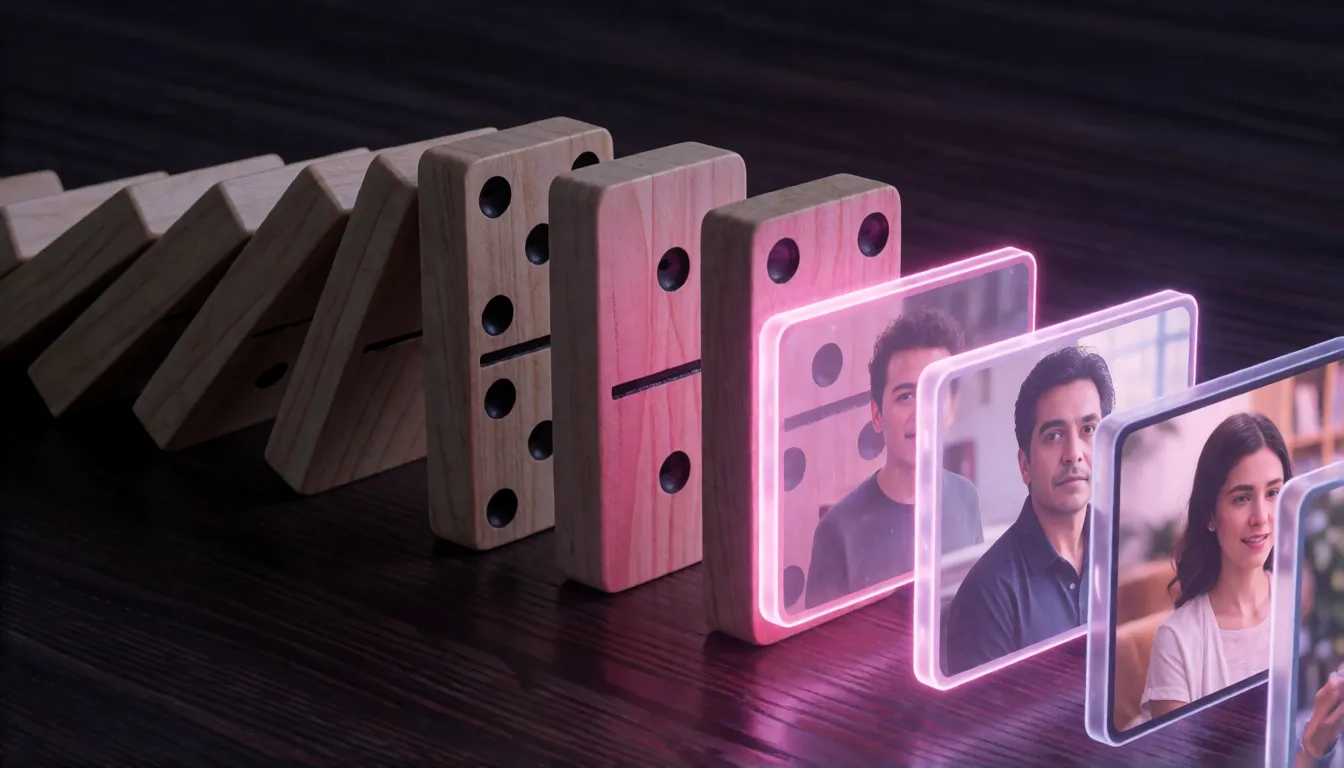
The FCP release at a glance
- Released by
- Nanjing University, Tencent ARC Lab, Zhejiang University
- Release
- Code and weights October 21, 2026; arXiv 2610.29989
- Method
- Future Chunk Prediction (training-only)
- Checkpoints
- 1.3B and 5B, each as FCP and TF baseline
- Tasks
- Image to video and video continuation
- Default clip
- 5 seconds; 768×432 at 16 fps or 1024×576 at 24 fps
- Open weights
- Yes, Apache-2.0
- Uncensored build?
- None found yet
Looking Ahead Uncensored Video Generator (Alternative Option)
Image to videoUpload a photo and describe the motion — Spicy AI animates it into a short clip.
Try a prompt
Example prompts are in English, which gives the most reliable results.
Who made it, and what it actually is
Looking Ahead is the first release of a new video research line from Tencent ARC Lab and its academic partners, published as the paper "Looking Ahead: Modeling Future Evolution in Autoregressive Video Generation". The authors are Ruopeng Gao, Yukun Huang (project lead), Jiarui Hu, Shuai Wang, Wenbo Hu, Ying Shan and Limin Wang (corresponding author). It is not a commercial app: there is no product site, subscription or hosted endpoint. The team publishes the work as a whole, a paper, a GitHub repository and four checkpoints on Hugging Face, and you run it yourself. The 1.3B checkpoints are trained on top of Wan2.1-T2V-1.3B and the 5B checkpoints on top of Wan2.2-TI2V-5B, so the release is best understood as a sharper training recipe applied to Alibaba's open Wan bases rather than a brand-new architecture.
Why people search for uncensored Looking Ahead
Open weights with no hosted service mean there is no platform moderation layer between you and the model, so adult creators naturally ask whether it is an uncensored video model. The honest answer is mixed. The weights are free to run locally, and the model card lists no extra content policy, but the training data is general real-world footage and nobody has published an uncensored fine-tune, LoRA or quantized build so far. NSFW LoRAs made for Wan 2.2 exist, yet nobody has shown they load into the FCP checkpoints. If you want uncensored motion from an adult photo today without a 60 GB download, the generator on this page does that in your browser.
Skip the GPU setup: upload an adult photo and describe the motion you want, no content filters for consenting adults.
Try uncensored image to video →The shortcut FCP was built to break
Autoregressive video models generate a clip chunk by chunk. During standard teacher-forcing training, the model sees real earlier frames and only has to denoise the next chunk. Because neighbouring chunks look almost identical, the model can score well by extending colours and motion from the last frames, without learning what should physically happen next. The paper calls this a shortcut created by temporal redundancy. FCP removes the easy path: from the features of the current chunk, extra heads must predict chunks further ahead, one to five steps away on the 5B model, without seeing the frames in between. The project page shows the effect with dominoes that keep falling in order and melting ice that raises the water level, cases where the baseline drifts.
Future chunk prediction in five design choices
The FCP recipe is small but deliberate, and each choice has an ablation in the paper behind it. These are the points that matter if you want to reproduce or extend the work:
- Parallel heads, not a chain: every future offset has its own predictor conditioned on the same current-chunk features. On 5B, five parallel offsets scored 33.8 on Physics-IQ, while a chained five-offset variant dropped to 31.0.
- Current chunk only: the predictors see the current chunk, not the full history, which the authors say is cheaper than full-context designs at the same quality.
- Two sources of supervision: future-prediction losses are added on both clean context latents and noisy current latents; together they add 3.3 points on the 1.3B ablation.
- No text in the helper heads: adding text conditioning to the predictors lowered the score by 1.1, because captions can leak what happens later.
- Zero inference overhead: all FCP modules are discarded after training, so a trained checkpoint samples exactly like a normal autoregressive model.
1.3B vs 5B: which checkpoint to download
The Hugging Face repository holds four model_ema.pt files: an FCP checkpoint and a teacher-forcing (TF) baseline for each size, about 63.2 GiB together. FCP files are larger than TF files because they still contain the training-only heads; the loader filters those tensors out, but you still need the disk space and enough CPU memory to read the file. You also need the matching Wan base weights, T5 encoder and VAE. For most people the 1.3B FCP checkpoint is the place to start, and the 5B FCP checkpoint is for when you have a large GPU and want the paper's headline results.
| 1.3B | 5B | |
|---|---|---|
| Base model | Wan2.1-T2V-1.3B | Wan2.2-TI2V-5B |
| Output | 768×432, 16 fps | 1024×576, 24 fps |
| FCP file | ≈ 8.01 GB | ≈ 34.20 GB |
| TF baseline file | ≈ 5.68 GB | ≈ 20.00 GB |
| Future offsets in training | 1–3 | 1–5 |
| Physics-IQ (TF → FCP) | 27.6 → 30.9 | 30.4 → 33.8 |
File sizes from the Hugging Face API; scores from Table 2 of the paper (image to video).

How much better is it? Reading the benchmarks
The fair comparison is the controlled one, where the same Wan2.2-TI2V-5B base, data and schedule are trained with and without FCP. There, image-to-video Physics-IQ rises from 30.4 to 33.8 and video continuation from 40.6 to 44.4. Gains elsewhere are smaller. In a cross-model table the 5B checkpoint also edges out Wan2.2-14B (32.2), HunyuanVideo-1.5 (33.4) and Sora 2 (26.5) and trails Grok Imagine Video (34.8), but the authors warn that those models differ in data and setup. Aesthetics, long clips, audio and human preference were not evaluated, so read the result as a physics-plausibility gain, not a sweeping quality leap.
| Benchmark (5B) | TF baseline | FCP |
|---|---|---|
| Physics-IQ, image to video | 30.4 | 33.8 |
| Physics-IQ, video to video | 40.6 | 44.4 |
| WorldModelBench | 7.22 | 7.64 |
| PAI-Bench-G | 81.13 | 82.38 |
| PhyGround | 2.75 | 2.80 |
FCP vs the Wan 2.2 base it starts from
Compared with plain Wan2.2-TI2V-5B, the 5B FCP checkpoint keeps the same backbone but changes three things you will notice. It needs a visual condition: even configs named T2V will not run from text alone, so it is an image-to-video and continuation model. It renders at 1024×576 and 24 fps instead of Wan's native 1280×704. And it generates autoregressively in chunks, which is why video continuation is a first-class task. What you give up is Wan's ecosystem: no official ComfyUI or Diffusers nodes, no LoRA loader and no GGUF or FP8 builds yet.
Run it locally: download, VRAM and first clip
The team tested the code only on Linux with an NVIDIA H200, Python 3.12, PyTorch 2.10 and CUDA 12.8; Windows support is an open issue. No minimum VRAM is published. As a rough guide, the Wan2.1 1.3B base is listed at about 8 GB and Wan2.2 5B at 24 GB with offloading, and the code swaps the T5 encoder off the GPU when less than 40 GB is free, but a 24 GB card running the 5B model is unverified. The basic flow:
- Install with uv (uv sync --python 3.12) and add FFmpeg.
- Download the base, for example hf download Wan-AI/Wan2.1-T2V-1.3B, then hf download TencentARC/Looking-Ahead and keep all four sub-folders.
- Image to video: run inference.py with --config fcp_wan21_t2v_1.3b, the checkpoint path, --use_ema, --image_path, a --prompt_file and --duration 5s.
- Video continuation: swap --image_path for --video_path and add --sink 3; by default the tail of your clip becomes the context.
- Remember that --duration includes the context: a 5-second 5B clip is 25 context frames plus 95 new frames.
- Inputs are scaled and center-cropped, so keep the subject away from the edges. ComfyUI is not supported yet.

Prompting for believable motion
Because the image already fixes the look, the prompt's job is to describe what changes over five seconds. The model was trained to anticipate cause and effect, so prompts that name a clear physical event play to its strength. The official examples are in English; other languages are untested. A simple formula is subject + action + physical consequence + camera. Templates to copy and adapt:
- Cause and effect: "The [object] tips over the edge of the [surface], falls and [result], the camera stays still."
- Fluids: "[Liquid] pours from the [container] into a glass, the level rises steadily and foam forms at the top, close-up."
- Continuation: "Continue the scene: the [subject] keeps [current action] and then [next action], same lighting and angle."
- Portrait motion: "The adult [person] turns toward the window, hair moves in the breeze, soft light, slow push-in."
- Keep one main event per clip, avoid scene cuts, and describe speed (slowly, suddenly) instead of piling on style words.
Where FCP fits: research, world models and creators
The release lands in the world-model conversation, where the goal is video that obeys physics rather than just looks pretty. Researchers studying training objectives can compare the FCP and TF checkpoints directly, which is rare in open releases. Teams prototyping robotics or simulation-style footage care about falling, pouring and rolling behaving correctly. For creators, the practical use is short continuations: extending a clip of a pour, a splash or a dance by a few seconds without the scene drifting. Reception is early. Two days after release the GitHub repository had about 65 stars and the paper page 118 upvotes, a research-community signal rather than mainstream adoption.
Are the FCP weights open source and free to use?
Yes. The code and the four checkpoints are released under Apache-2.0, which allows commercial use, modification and redistribution as long as you keep the license, the NOTICE file and attribution. The NOTICE also credits the Wan bases and other components, and the WISA training data is not covered by it, so check those terms before a commercial product. The paper itself is CC BY 4.0. There is no official API or hosted demo, so the real cost is your own GPU time.
Is there an uncensored Looking Ahead model?
Not as a separate release. As of October 23, 2026, a Hugging Face search for the name returns only the official TencentARC repository, with no uncensored or NSFW fine-tunes, LoRAs or quantized copies. Running the open weights yourself avoids a platform filter, but the model was not trained for adult content and the team does not advertise NSFW use. For uncensored photo animation in a similar style without a local install, a similar no-filter image-to-video tool is available on this site for consenting adults (18+).
Upload a photo of a consenting adult and describe the motion in one sentence.
Open uncensored image to video →Three things some coverage gets wrong
Early secondary coverage repeated details that the paper does not support. Check these before you cite anything:
- The institutions are Nanjing University, Tencent ARC Lab and Zhejiang University, not Tsinghua.
- The method is a training objective (Future Chunk Prediction), not a "lookahead attention" layer, and it adds nothing at inference.
- The headline metric is Physics-IQ; figures such as 94.8% structural consistency or a 28.6% FVD drop do not appear in the paper. Long, drift-free videos are not claimed either: clips are trained at 5 seconds.
Popular things to make with uncensored photo-to-video
Photo to motion clip
Upload an adult portrait and describe one movement, such as a turn, a smile or a walk, to get a short clip.
Boudoir and fashion loops
Add fabric movement, light flicker or a slow camera push to a styled photo for social teasers.
Story beats
Animate key frames of an adult romance or fantasy scene one moment at a time, in vertical or wide formats.
Field notes before your first FCP render
- Start with the 1.3B FCP checkpoint; move to 5B only with a large GPU and ample disk space.
- Plan disk space for the 63.2 GiB of checkpoints plus the Wan base, T5 and VAE files.
- Keep the subject centered: inputs are center-cropped to 16:9.
- Stay within 5 seconds; longer rollouts use a basic rolling cache and quality is not guaranteed.
- Seed 42 and the default sampler (UniPC, 50 steps, CFG 3.0) reproduce the official examples.
- Only use images of adults (18+) and never real people without their consent.
Self-hosting the weights vs generating online
| Local deployment (official weights) | Spicy AI online | |
|---|---|---|
| Content filters | Set by Tencent ARC Lab | No content filters |
| Open weights | Yes | Not needed — runs in the browser |
| Price to start | Varies by plan | Free tier available |
- Image-to-video in the browser
- Free queue at 0 credits (sign in, daily limit)
- Portrait (9:16) and landscape (16:9) clips
FAQ
Is it a model or a training method?
Both. The paper introduces Future Chunk Prediction, and the team releases four trained checkpoints (1.3B and 5B, FCP and TF baseline) you can run.
Is this model the same as Wan 3.0?
No. Its checkpoints are trained on Wan2.1-T2V-1.3B and Wan2.2-TI2V-5B. It is not Wan 3.0 or an Alibaba release.
Can it generate video from text only?
No. It needs an input image or video, even with configs named T2V, so it does image to video and video continuation.
Can I run it on an RTX 4090?
Possibly the 1.3B model, but no minimum VRAM is published and the team only tested on H200 GPUs. The 5B model on 24 GB is unverified.
Does it work in ComfyUI?
Not officially. There are no ComfyUI or Diffusers nodes, no LoRA loader and no quantized builds yet.
Is there an uncensored Looking Ahead?
No uncensored fine-tune has been published. For uncensored photo-to-video in the browser, use the generator on this page.
Is Spicy AI affiliated with Tencent ARC Lab?
No. Spicy AI is an independent platform and is not affiliated with or endorsed by Tencent ARC Lab. Looking Ahead is a trademark of its respective owner.
Is it free?
You can start free: sign in and Spicy AI's free video queue animates your photo with MiniMax H3 Turbo at 0 credits, with a daily limit. The fast queue, other video models and longer clips use credits.
Sources
Spicy AI is not affiliated with Tencent ARC Lab. Looking Ahead and other product names are trademarks of their respective owners and are used here for identification only. All content must depict adults (18+).