Uncensored AI Image · Google DeepMind
Nano Banana 2: Versions, 4K Output, Prompts and Limits
Nano Banana 2 is the latest fast model in Google DeepMind's Gemini image series, released on February 26, 2026 as Gemini 3.1 Flash Image; a 2.1 update followed on October 6, 2026. It is not uncensored: Google's content policies apply and every image carries a SynthID watermark. This guide covers versions, 4K, reference limits and prompt templates. If you want an uncensored Nano Banana 2 style workflow for adult edits, Spicy AI's image editor runs other models without content filters.
Spicy AI is not Gemini 3.1 Flash Image — this page currently runs Seedream, Krea 2 and Wan 2.6.
- Free to start
- No filters
- Runs in browser
Key facts at a glance
- Developer
- Google DeepMind
- Model ID
- gemini-3.1-flash-image
- Release date
- February 26, 2026 (2.1: October 6, 2026)
- Resolution
- 512px to 4K
- Consistency
- 5 characters, 14 objects (2.1: 4 and 10)
- Open weights
- No, closed model
- Uncensored?
- No, Google content policies and SynthID
Nano Banana 2 Alternative: Uncensored Image Generator
Text to imageDescribe the image you want. Add a reference photo to edit it, or leave it empty for text-to-image.
Try a prompt
Example prompts are in English, which gives the most reliable results.
What is Gemini 3.1 Flash Image?
Nano Banana is the consumer name Google uses for its Gemini image models, and version 2 is the Flash-tier member of that series, with the model ID gemini-3.1-flash-image. Google positions it as bringing Pro-level world knowledge, text rendering, infographics and Search grounding to Flash speed. It outputs from 512px up to 4K in many aspect ratios, can translate or localize text inside an image, and Google says one workflow can keep up to 5 characters recognizable and up to 14 objects faithful. Its knowledge cutoff is January 2025. Google offers it as a whole product family: you can use it in the Gemini app, Search AI Mode, Flow, Google Ads and Stitch, while Google AI Studio, the Gemini API and Vertex AI are just the developer routes. It is a closed model with no public weights, so it cannot be downloaded or run locally.
Why people look for an uncensored Gemini 3.1 Flash Image
Google filters both the prompt and any uploaded photo. Swimwear or lingerie outfit swaps, body edits and suggestive poses are often refused, and every output carries an invisible SynthID watermark plus C2PA Content Credentials. That is why people search for an uncensored Nano Banana 2 or an NSFW mode. No unfiltered build of Google's model exists, and we do not share bypass tricks. If you want uncensored generation, you can do it on this site: Spicy AI's image editor does not host Google's model, but runs Seedream, Krea 2 and Wan 2.6 for adults (18+) editing images they have the right to use.
Versions explained: 2, 2.1, Lite and the Pro tier
Most confusion starts with the names. Each marketing name maps to one Gemini model ID, which developers need when calling the API; app users simply pick the model in the Gemini interface. Version 2.1 is more than a patch: it moves to Gemini 3.6 Flash and accepts up to 14 reference images, but its consistency limits drop from 5 characters and 14 objects to 4 characters and 10 objects. Many articles mix those two sets of numbers up, so check which version a tutorial was written for.
| Version | Model ID | Released | Base |
|---|---|---|---|
| 2.1 | gemini-nano-banana-2.1 | Oct 6, 2026 | Gemini 3.6 Flash |
| 2 | gemini-3.1-flash-image | Feb 26, 2026 | Gemini 3.1 Flash Image |
| 2 Lite | gemini-3.1-flash-lite-image | 2026 | Gemini 3.1 Flash Lite Image |
| Pro | gemini-3-pro-image | Nov 2025 | Gemini 3 Pro Image |
Release dates from Google DeepMind model cards; the first Nano Banana appeared in August 2025 and the Pro tier in November 2025 (press reports). The exact Lite date was not confirmed.
Version 2 vs 2.1: what changed
Version 2.1 outputs 1K, 2K or 4K (1K by default) and fixes stitching artifacts that wide and panoramic ratios such as 1:4, 4:1, 1:8 and 8:1 showed at 2K and 4K. It adds a thinking setting with minimal, medium and high levels, medium by default, which helps with dense infographics and multi-image blends. Google's model card shows higher Elo for 2.1 than 2.0 in overall preference, infographics, general editing and multi-character scenes, but those ratings are Google's own and have not been independently reproduced. Choose the update for wide 4K layouts and more references; stay on version 2 if you need the higher 5-character, 14-object limit.
| Spec | Version 2 | Version 2.1 |
|---|---|---|
| Resolution | 512px to 4K | 1K, 2K, 4K (default 1K) |
| Character consistency | Up to 5 | Up to 4 |
| Object fidelity | Up to 14 | Up to 10 |
| Reference images | Not stated as a count | Up to 14 |
| Thinking levels | No | Minimal, medium, high |
| Knowledge cutoff | January 2025 | Partly March 2026, partly January 2025 |
Is Nano Banana 2 open source or open weights?
No. Google has not released weights, code or a local build, and there is no GGUF, ComfyUI checkpoint or Hugging Face download that is the real model. Files labeled that way are other models or scams. You can only use it through Google's own surfaces: the Gemini app, Search AI Mode, Flow and other Google products for everyday use, or AI Studio, the Gemini API and Vertex AI if you build apps. That also means you cannot fine-tune it, add LoRAs or remove its safety layer yourself.
4K output, reference images and character consistency
Both versions can produce 4K images, but large renders are slower and cost more, so a sensible routine is to iterate the layout at 1K and render only the final at 4K. For consistency, remember that three different numbers float around. Version 2 keeps up to 5 characters and 14 objects consistent, and Google Cloud adds that this varies by product and interface. Version 2.1 accepts up to 14 reference images, yet keeps only 4 characters and 10 objects consistent; 14 reference images is not the same as 14 objects. In practice, give each character its own clear reference photo and a fixed short description you repeat in every prompt, and expect some drift in long multi-turn sessions.
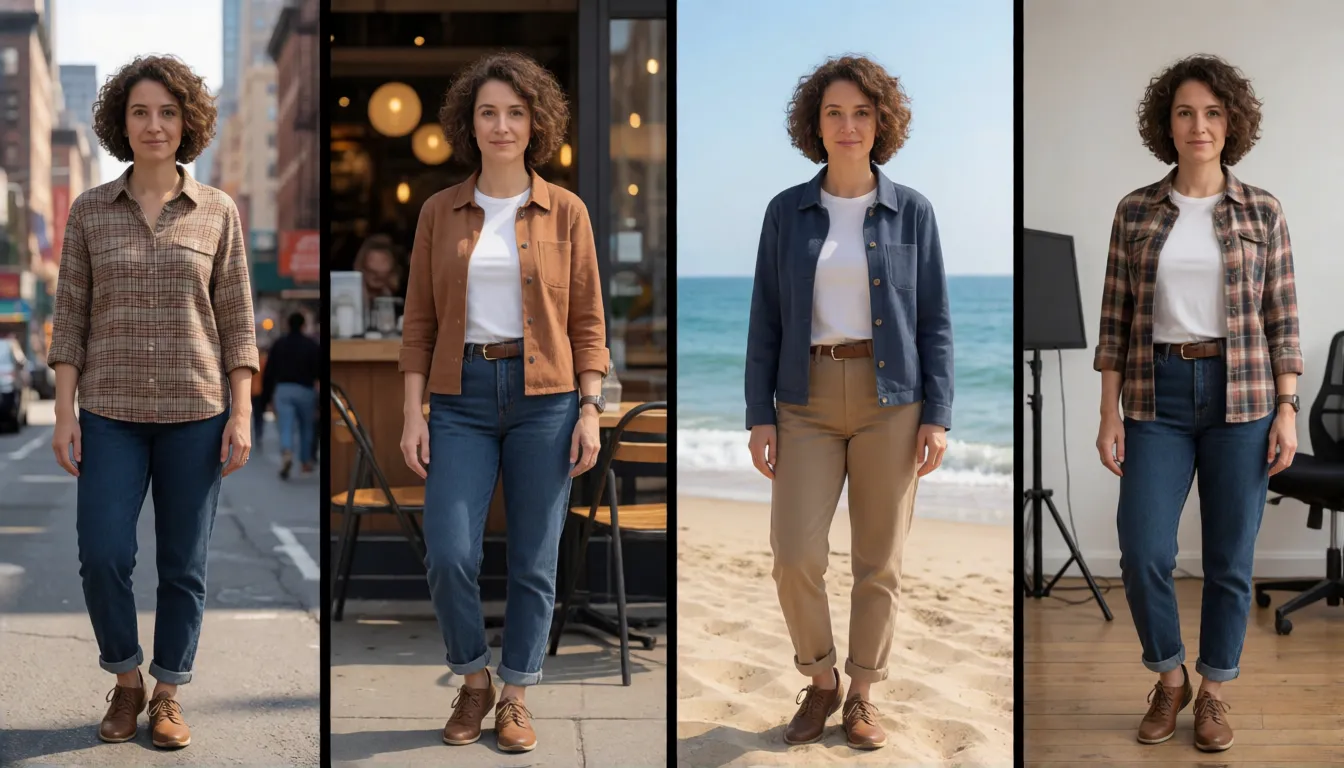
What people make with Nano Banana 2
The series became famous for photo edits that keep a person recognizable, and the Flash model pushed that into faster, cheaper everyday work. These are the creations Google showcases and that appear most often in shared galleries and tutorials:
- Infographics and explainers: charts, step diagrams and recipe cards with readable labels, often grounded in Search results for current facts.
- Localized ads and posters: one design rendered again with the text translated into another language while the layout stays put.
- Product mockups: packaging, bottles and sneakers placed into new scenes with consistent logos and materials.
- Storyboards and comic panels: the same characters carried across four to eight frames for pitches or short stories.
- Figurine and toy-box portraits: the collectible-figure trend that made the first Nano Banana viral remains a favorite style.
- Outfit, hairstyle and room makeovers: try-on and redesign edits from a single uploaded photo.
How users and testers rate the series
Public reception has been strong but not uncritical. The first Nano Banana topped LMArena's image edit leaderboard after millions of blind community votes, and testers praised its instruction following and character consistency so much that it was nicknamed a Photoshop killer. For version 2 and 2.1, the most visible scores are Google's own Elo comparisons, which have not been independently reproduced. The recurring complaints are just as consistent: refusals on harmless fashion or swimwear edits, blurry small text at 1K, drift after many turns, and a visible watermark in some free surfaces. Our own view: it is excellent for text-heavy and branded images, and frustrating for adult or body-focused edits.
- Praised: speed, readable in-image text, multilingual localization, keeping faces and products consistent.
- Criticized: strict and sometimes unpredictable refusals, SynthID marking, quality drop in long edit chains.
- Our take: pick it for infographics and ads; pick an uncensored editor for adult glamour work.
How to write prompts that work
The model rewards specific, structured prompts written as full sentences rather than tag lists. Start with the subject, then the action or change, then setting, lighting, camera or style, and finally what must stay the same. For infographics, give the actual data, units, layout and language. For edits, name one change per turn and lock the rest. Small text is often blurry at 1K, so move to 2K or 4K when lettering matters, and on version 2.1 raise the thinking level for dense layouts.
- Be literal: write "replace the red jacket with a navy wool coat" instead of "make it nicer".
- Lock what matters: end edit prompts with "keep the face, pose and background unchanged".
- Quote any text you want rendered and state the font style and position.
- One change per turn; chain small edits instead of one long instruction.
- Give aspect ratio and resolution explicitly, for example 4:5 at 2K.
Prompt templates you can copy
Fill in the brackets and keep the structure. The same templates work in Spicy AI's uncensored editor for adult (18+) subjects, although results will differ because a different model renders them.
- Edit: "Change [element] to [new element], keep the face, pose, lighting and background unchanged."
- Scene swap: "Place this person in [location] at [time of day], match the light direction and color temperature."
- Infographic: "Create a [ratio] infographic titled \"[title]\" with [n] sections: [data]. Flat icons, readable labels."
- Localization: "Translate all text in this poster into [language], keep fonts, layout and colors identical."
- Storyboard: "Four-panel storyboard of [character description] doing [actions], same face and outfit in every panel."
- Product shot: "Place this [product] on [surface] in a [style] studio, soft key light, 4K, logo sharp and unchanged."
Is it free to use?
You can try it in the Gemini app, where version 2 replaced the Pro model across the Fast, Thinking and Pro options, and in Google AI Studio, but Google does not publish one unlimited free tier that covers every channel. Limits differ between the Gemini app, AI Studio, Vertex AI and Flow, and they change, so check the current terms for the channel you use. Developer access through the API is paid.
Known limits and failure modes
Google's own model cards list weaknesses worth planning for. These come from the official documentation, not from our tests:
- Small text is often blurry at 1K, and long paragraphs or full-page layouts remain weak.
- Character consistency is not always perfect, especially across many turns.
- Mask or scribble edits may follow the instruction only partly or leave ink marks behind.
- Left and right are sometimes mixed up in spatial instructions.
- World knowledge, 3D reasoning and factual accuracy are limited, so do not treat it as a live database.
Is there an uncensored version of Google's model?
No. Google has not released an uncensored, NSFW or unfiltered build of version 2 or 2.1, and none of its official channels has a switch that turns the content policy off. The Gemini app, AI Studio, the Gemini API and Vertex AI all apply Google's generative AI prohibited use policy to prompts and uploaded photos, and every output carries SynthID. The Gemini API lets developers adjust some safety filter thresholds, but Google's core protections and usage policy still apply, so that is not an uncensored model either. Apps or downloads sold as an uncensored Nano Banana 2 are not Google's model. If you need adult (18+) image generation, the honest answer is a substitute: the editor described in the next section runs other models without those filters.
Uncensored alternative to Nano Banana 2 on Spicy AI
If Gemini refuses your edit, Spicy AI's image editor is a separate, adults-only tool where you can generate without those content filters. It does not run any Google image model; it runs Seedream, Krea 2 and Wan 2.6, so results will look different. To try it, open the editor, pick text to image or upload a reference photo, paste one of the templates above, describe what must stay the same, and generate. Only edit photos you own or have permission to use, and never depict minors or real people without consent.
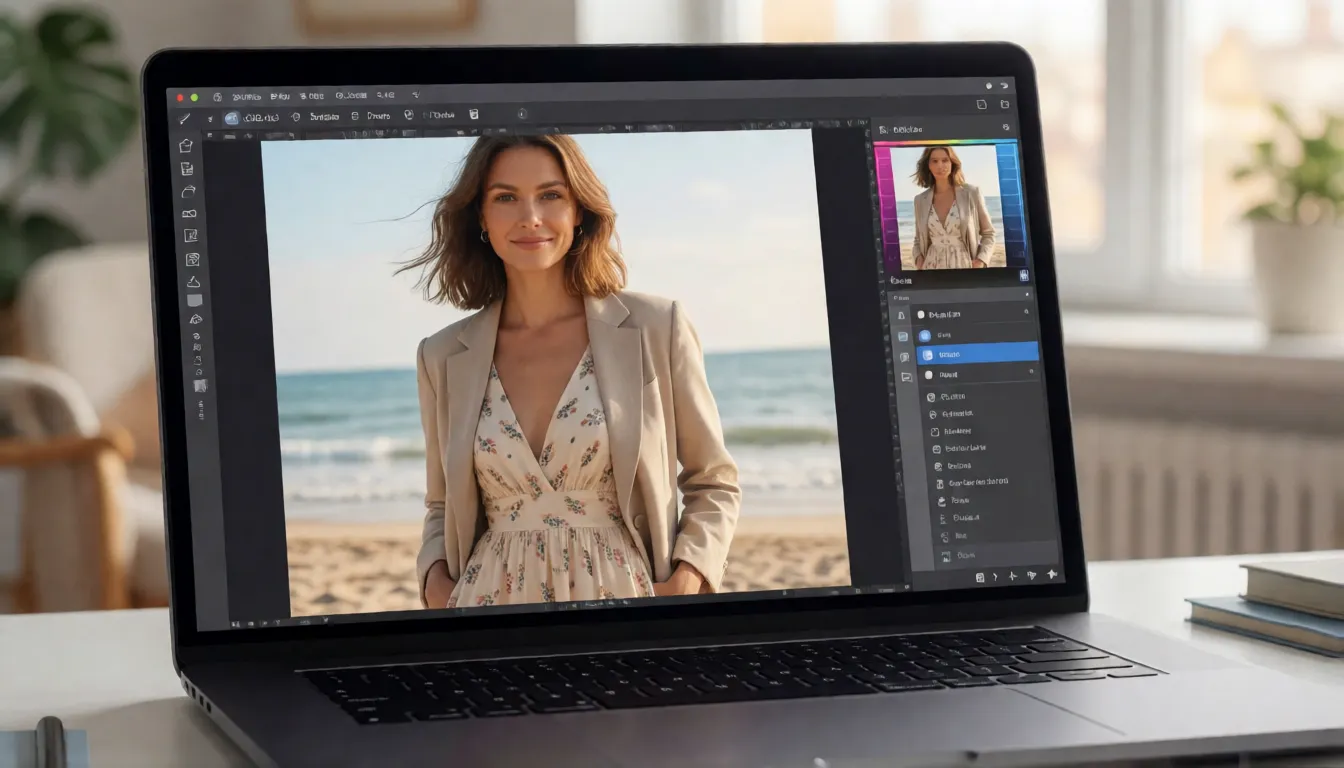
What you can create
Outfit and style swaps
Change clothing, from evening wear to swimwear, while keeping the same adult face.
Glamour and boudoir shots
Turn a plain photo into a stylish adult glamour image.
Scene changes
Move a subject to a beach, hotel or studio with matching light.
Prompt tips for Gemini 3.1 Flash Image-style results
- Describe the change you want and what must stay the same, such as the face or pose.
- Iterate at low resolution first and save the highest size for the final image.
- Give each recurring character one clear reference photo.
- State that everyone shown is an adult (18+), and use only photos you have the right to edit.
Using official Gemini 3.1 Flash Image vs generating online on Spicy AI
| Official service | Spicy AI online | |
|---|---|---|
| Content filters | Set by Google DeepMind | No content filters |
| Open weights | No | Not needed — runs in the browser |
| Model | Nano Banana 2 | Seedream, Krea 2 and Wan 2.6 |
| Price to start | Varies by plan | Free tier available |
- Text-to-image from a prompt
- Image-to-image edits from a reference photo
- Up to 4 images per run in multiple aspect ratios
FAQ
What is the difference between version 2 and 2.1?
Version 2 is Gemini 3.1 Flash Image, released February 26, 2026. Version 2.1 is built on Gemini 3.6 Flash and was released October 6, 2026; it accepts 14 reference images and fixes wide-ratio 4K artifacts, but keeps 4 characters and 10 objects consistent instead of 5 and 14.
Is there an uncensored Nano Banana 2?
No. Google applies content policies and safety filters, and every image carries SynthID. For uncensored adult generation you can use Spicy AI's image editor, a separate service running different models.
Can I run it locally?
No. It is a closed model without public weights, so there is no local or open-source version.
Is the 2.1 context window 1M or 131K tokens?
The model card says up to 1M, while the Gemini API model page lists 131,072 input and 32,768 output tokens. Plan an integration around the API page.
Does Spicy AI use Google's model?
No. Spicy AI's image editor runs Seedream, Krea 2 and Wan 2.6, so results will not match Google's model.
Is Spicy AI affiliated with Google DeepMind?
No. Spicy AI is an independent platform and is not affiliated with or endorsed by Google DeepMind. Gemini 3.1 Flash Image is a trademark of its respective owner.
Is it free?
You can start free with daily generations, and buy credits when you need more.
Sources
Spicy AI is not affiliated with Google DeepMind. Gemini 3.1 Flash Image and other product names are trademarks of their respective owners and are used here for identification only. All content must depict adults (18+).