Uncensored AI Image · Black Forest Labs
Uncensored FLUX.2 (Flux 2): Model Family, Prompts and Image Generator
FLUX.1 made Black Forest Labs a favorite of AI artists in 2024, and FLUX.2, launched on November 25, 2025, is the sequel built on that momentum. It is a family rather than one model: open-weight checkpoints sit next to hosted tiers, and every tier handles text-to-image and multi-reference editing in one model. This guide covers what improved over FLUX.1, which jobs FLUX.2 handles better, where it still falls short and whether it is unrestricted. It is not: there is no official uncensored FLUX.2. For adult (18+) images without a moderation layer, Spicy AI's image generator runs alternative models in your browser.
- Free to start
- No filters
- Runs in browser
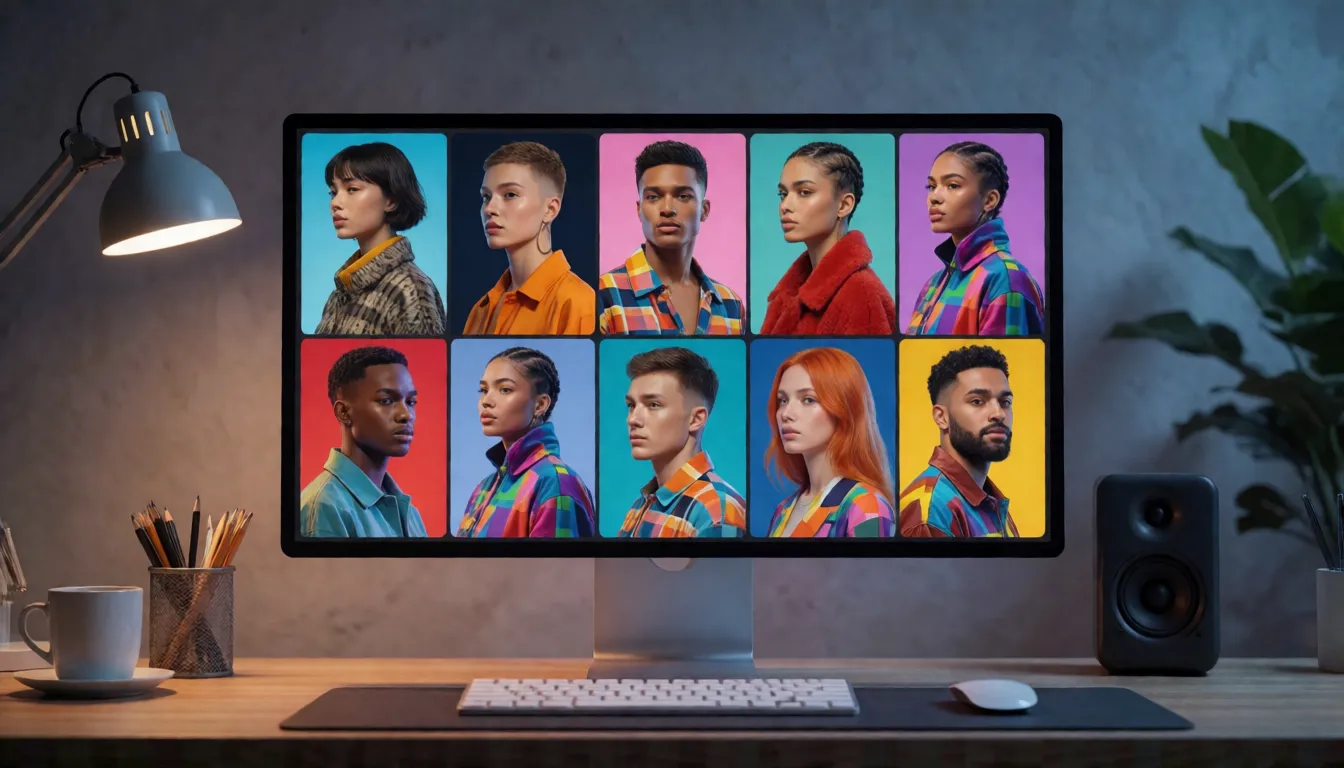
FLUX.2 at a glance
- Developer
- Black Forest Labs (Freiburg, San Francisco)
- First release
- November 25, 2025
- Predecessor
- FLUX.1 (August 2024)
- Tiers
- [dev], [pro], [flex], [max], [klein] 4B and 9B
- Tasks
- Text-to-image and multi-reference editing
- Top output
- Up to 4 megapixels
- Open weights?
- [dev] and [klein] yes; others hosted only
- Video or audio?
- No, still images only
- Uncensored?
- No official version; community builds only
Uncensored FLUX.2 Alternative Image Generator
Text to imageDescribe the image you want. Add a reference photo to edit it, or leave it empty for text-to-image.
Try a prompt
Example prompts are in English, which gives the most reliable results.
What is FLUX?
FLUX.2 is the current image line from Black Forest Labs (BFL), the German lab based in Freiburg and San Francisco that also made FLUX.1. A single checkpoint does both generation and editing: you can start from a prompt, or pass several reference images and ask for changes while keeping faces, products or style consistent. BFL highlights exact HEX color matching, JSON-structured prompts, legible typography and infographics, and output up to 4 megapixels. The open [dev] model is a 32B rectified flow transformer that BFL describes as coupled with a Mistral-3 24B vision-language model. BFL offers the family through its playground, its API and downloadable weights for [dev] and [klein]; the API is one route among several, not the whole product. It makes still images only, not video or audio.
Why people look for an uncensored FLUX
People search for an uncensored FLUX.2 because the official route is filtered at every step. The [dev] model card states that the repository includes NSFW and IP filters, the non-commercial license requires anyone running it to deploy a content filter or review outputs manually, and BFL's usage policy forbids non-consensual intimate imagery, sexual content involving minors and sexualized images of real people without consent. The hosted tiers apply moderation on top. Tasteful boudoir, swimwear or fantasy art can still be refused. FLUX.2 has no uncensored version from BFL; community builds exist mainly around [klein]. If you want uncensored generation, you can do it on this site: Spicy AI does not host FLUX, but it offers a similar uncensored image generator with no extra filter, for adults creating legal content.
Want adult images the official tiers refuse? Try the same prompt in Spicy AI's image generator, which runs alternative models.
Try it now →From FLUX.1 to FLUX.2: building on a hit
Black Forest Labs was founded by researchers behind the original Stable Diffusion, and its first release, FLUX.1 in August 2024, quickly became the go-to open image model. It came in three versions, [pro] by API, [dev] with open non-commercial weights and the fast Apache 2.0 [schnell], all built on a 12B transformer. Its realistic skin, hands and photo look made it the default base for ComfyUI workflows and thousands of community LoRAs, and xAI's Grok used it for image generation in 2024. BFL kept the line busy with FLUX1.1 [pro], the Fill, Depth, Canny and Redux tools, and FLUX.1 Kontext for instruction-based editing in May 2025. FLUX.2 arrived with that audience already in place. It keeps the bracketed tier names and the open-plus-hosted split, and aims the upgrade at what FLUX.1 users kept asking for: more reference images, sharper text, exact colors and higher resolution.
What's new in FLUX.2 compared with FLUX.1
The upgrade is less about a new look and more about control. According to BFL's launch post and model cards, the biggest changes are a much larger open model, a vision-language model that reads your prompt instead of the older text encoders, and editing merged into the main checkpoint. The table puts the two generations side by side.
| FLUX.1 (2024) | FLUX.2 (2025) | |
|---|---|---|
| Open model size | 12B [dev] and [schnell] | 32B [dev], plus 4B and 9B [klein] |
| Prompt understanding | T5-XXL and CLIP text encoders | Mistral-3 24B vision-language model |
| Editing | Separate Kontext, Fill and Redux models | Generation and editing in one checkpoint |
| Reference images | One image per edit in Kontext | Up to 10 (launch post), 8 via API |
| Top resolution | 4 MP only in FLUX1.1 [pro] Ultra | Up to 4 MP across the family |
| Colors and structure | Described in words | HEX codes and JSON prompts |
| Text in images | Short words and logos | Longer typography, infographics, UI mockups |
| Small permissive model | [schnell] 12B, Apache 2.0 | [klein] 4B, Apache 2.0 |
FLUX.1 details come from its Hugging Face model card; FLUX.2 details from BFL's launch post and documentation.
The FLUX.2 family at a glance: pro, flex, max, klein and dev
Choose a tier by how you want to run it and what the job needs. The open checkpoints let you work offline and fine-tune; the hosted tiers trade that control for speed and zero setup. The reference-image limits differ by route, which is why you will see three numbers quoted: the launch post says up to 10, the API documentation allows 8 (10 in the playground), and the [dev] documentation recommends at most 6. Quote the number together with its context.
| Tier | Open weights? | Reference images | Best for |
|---|---|---|---|
| [dev] | Yes, 32B, FLUX non-commercial license | Up to 6 recommended | Local work, fine-tuning, research |
| [pro] | No, hosted API | 8 (API), 10 (playground) | Production batches, balanced quality and speed |
| [flex] | No, hosted API | 8 (API), 10 (playground) | Typography and detail, adjustable steps (up to 50) and guidance (1.5–10) |
| [max] | No, hosted API | 8 (API), 10 (playground) | Highest quality, grounding search on live web data |
| [klein] 4B | Yes, Apache 2.0 | Up to 4 | Real-time, high volume, consumer GPUs (about 13 GB VRAM) |
| [klein] 9B | Yes, FLUX non-commercial license | Up to 4 | Better quality-to-speed balance |
Tier details come from BFL's family overview and image editing documentation.
Flux 2 release timeline: from launch to FLUX 3
The family grew in steps over eleven months. Each date below changed what a buyer or a local user could do, and the last three belong to the next generation rather than to the model itself.
- November 25, 2025 — [pro], [flex] and [dev] launch: hosted tiers for production, open 32B weights for local work.
- December 16, 2025 — [max] arrives with grounding search, so prompts can draw on current web information.
- January 15, 2026 — [klein] 4B and 9B: four-step distilled models that fit consumer graphics cards.
- January 29, 2026 — [flex] becomes up to 3× faster, which makes step-heavy typography jobs cheaper in time.
- March 3, 2026 — [pro] gets about 2× faster and a rolling flux-2-pro-preview endpoint next to the pinned one.
- July 23, 2026 — BFL announces FLUX 3, a multimodal foundation model.
- October 1 and 15, 2026 — FLUX 3 Image and the open FLUX 3 Image Klein go live; FLUX.2 remains on sale.
What FLUX does well: HEX colors, JSON prompts and text
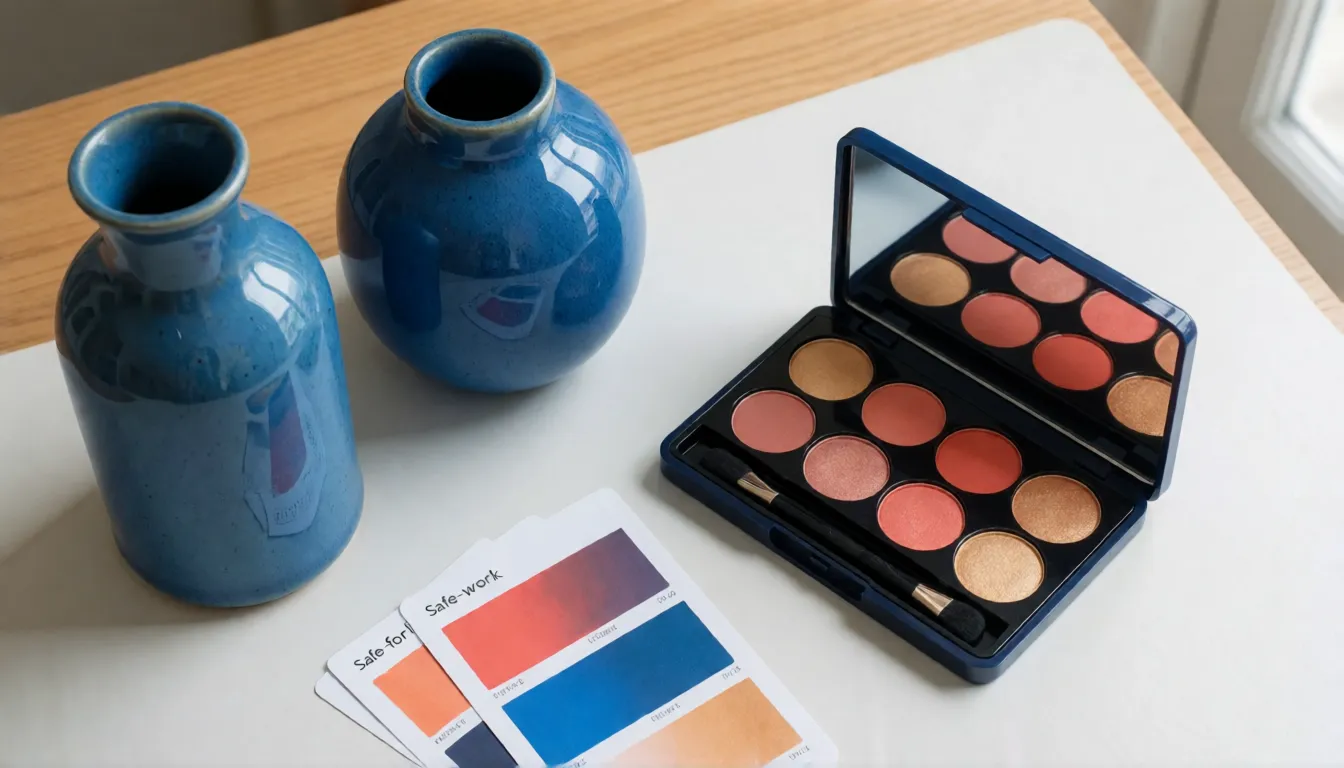
The most useful features are the ones aimed at design work rather than pure photorealism. BFL's prompting guide shows them with simple examples you can adapt: a vase colored with an exact HEX code, a six-color eyeshadow palette where every pan matches a given value, and a famous painting re-described as a JSON object with separate fields for subject, style, lighting and composition. Each example tests something older models handled loosely. Know the limits too: [klein] has no prompt upsampling, grounding search only exists in [max], dense text can still contain errors, and infographics need a human proofread.
- HEX colors: write the code next to the object, e.g. "a ceramic vase in #1E3A8A", to hit brand palettes.
- JSON prompts: split a scene into keys such as subject, outfit, lighting, camera and background to change one part at a time.
- Typography: put the exact headline in quotes and say where it sits; keep it short.
- Multi-reference editing: give each reference a role ("face from image 1, jacket from image 2").
- Output size: up to 4 MP stills — that is about 2048 × 2048 pixels, not 4K video.
Which jobs FLUX.2 handles better: e-commerce, ads, posters and LoRA art
The upgrades map to specific jobs. Multi-reference editing helps wherever a product, a face or a visual identity must stay the same across many images, something FLUX.1 users solved with stacked LoRAs and extra Kontext passes. Sharper typography and HEX colors help design work. The jobs below are the ones BFL's documentation targets and the open ecosystem is built around; they describe common workflows, not a market ranking.
- E-commerce catalogs: the same product photographed on new backgrounds and in brand colors, from a few reference shots.
- Ad and social variants: one campaign idea rendered in several layouts and headlines for testing.
- Posters and infographics: text-heavy layouts that need legible titles, then a human check of every word.
- Character and fashion series: multi-reference edits that keep a model's face while changing outfits or locations.
- Style LoRAs: the [dev] model tree lists 80 adapters and 39 fine-tunes, mostly art styles, characters and speed-ups.
How the community has received FLUX.2
Download counts on Hugging Face are the clearest public signal. They show that the model remains a widely used base for local work almost a year after launch, and that most people run it through ComfyUI packaging rather than raw scripts. They measure adoption, not image quality or search demand, so test on your own prompts.
| Signal (October 2026) | What it shows |
|---|---|
| 2,436 likes on the official [dev] repo | Strong interest in an open 32B image model |
| 390,205 [dev] downloads in a month | Hands-on local use, not just curiosity |
| 1,154,659 monthly downloads of the Comfy-Org package | ComfyUI is the default way to run it |
| 80 adapters, 39 fine-tunes, 17 quantizations | An active LoRA and low-VRAM ecosystem |
Hugging Face figures are page snapshots and change daily.
Flux 2 prompt guide: how to write prompts that work
The family follows long, specific prompts well, so describe the image the way an art director would brief a photographer. Put the subject first, then the setting, the light, the camera and the style, and finish with any exact text or color codes. Plain sentences work; JSON helps when you plan to change one element per retry. With reference images, describe only what should change and name which image supplies what.
- Order: subject → action or pose → setting → light source → camera and lens → style or film stock.
- Be concrete: "an adult woman in her thirties in a linen shirt" beats "beautiful, stunning, 8k".
- Name the light: window light from the left, neon through blinds, overcast noon.
- Quote exact text and keep headlines under about six words.
- For [klein], write the details yourself; it does not expand short prompts.
- Change one thing per attempt so you know what fixed the result.
FLUX prompt templates you can copy
Replace the bracketed parts and keep the structure. All templates describe adults and work as a starting point in the generator above.
| Goal | Template |
|---|---|
| Editorial portrait | Editorial photo of an adult [subject] in [outfit], [pose], [location], soft [light source], 85mm lens, shallow depth of field, natural skin texture. |
| Brand-color product shot | [Product] on a [surface] in [HEX code], background in [second HEX code], studio softbox from above, crisp shadows, catalog style. |
| Poster with headline | Poster with the headline "[short title]" at the top in bold sans-serif, an adult [subject] in [scene] below, [color mood], print texture. |
| JSON scene | {"subject": "adult [subject]", "outfit": "[outfit]", "setting": "[place]", "lighting": "[light]", "camera": "[angle, lens]", "style": "[style]"} |
| Reference edit | Keep the face and hair from image 1, dress the person in the [garment] from image 2, place them in [location], match the original lighting. |

Is FLUX.2 unrestricted? The state of uncensored FLUX.2
There is no uncensored FLUX.2 from BFL, and the community work is smaller and narrower than the name suggests. In an October 2026 Hugging Face snapshot, most builds target [klein], not the 32B [dev]: ponpoke's uncensored text encoder for Klein 9B (about 21,145 downloads, 750 likes) and its 4B version (about 12,130 downloads), plus darknight9121's Klein Base 9B checkpoint (about 23,279 downloads). They mostly swap or modify the Qwen3 text encoder rather than retrain the image model. On the [dev] side we found only an experimental abliterated Mistral text encoder with no recorded downloads, and no widely used full uncensored checkpoint as of the check date. These are unofficial, their quality is unverified, and BFL's license and usage policy still apply: no minors, no real people without consent, no removal of C2PA or watermarks.
Uncensored FLUX.2 review: what is good and what is not
Almost a year after launch, the picture is fairly clear. FLUX.2 is strongest when you need control and consistency, and weakest on hardware cost, licensing and content freedom. The table weighs both sides from the documentation and what the community reports; test it on your own prompts before you commit.
| Good | Not so good |
|---|---|
| Multi-reference edits keep faces, products and style consistent | The 32B [dev] model is heavy: about 90 GB of VRAM at full precision, so most people run FP8 or GGUF builds |
| Exact HEX colors and JSON prompts suit brand and design work | [dev] and [klein] 9B weights are non-commercial; only [klein] 4B is Apache 2.0 |
| Legible headlines, posters and infographics | Long or dense text still needs a human proofread |
| Open weights with a large LoRA, ControlNet and quantization ecosystem | Filtered by design, with no official uncensored version |
| Hosted tiers for zero-setup production | Still images only; FLUX 3 now offers 4K and layout boxes |
FLUX.2 vs FLUX 3: which one to use now
FLUX 3 is the newer flagship, not a shutdown notice: as of October 2026 FLUX.2 is still listed in BFL's documentation and pricing, and BFL has not announced an end date. Pick by task. FLUX 3 Image is the choice for 4K output, bounding-box layout control and grounding by default. FLUX.2 keeps the mature ecosystem: the 32B [dev] base, hundreds of LoRAs and quantizations, and the Apache 2.0 [klein] 4B.
| FLUX.2 | FLUX 3 Image | FLUX 3 Image Klein | |
|---|---|---|---|
| Open weights? | [dev] and [klein] yes; [pro], [flex], [max] no | No, hosted | Yes, 5.6B, FLUX Kommunity License |
| Top output | 4 MP | 4K | 4K |
| Reference images | Up to 8–10 (hosted) | Up to 10 | Up to 10 |
| Layout control | Prompt, JSON, HEX | Bounding boxes | Prompt upsampler required |
| Ecosystem | Large: LoRAs, ControlNet, GGUF | New | New |
FLUX 3 details come from BFL's FLUX 3 Image documentation; BFL has not published a support timeline for the older generation.
How to make uncensored FLUX.2-style images on Spicy AI
Spicy AI does not run FLUX; it uses other image models, so results will look different from BFL's output. The workflow is the same idea without a GPU or a filter layer:
- 1. Open the image generator from the button at the top of this page.
- 2. Paste one of the templates above and fill in subject, setting, light and style.
- 3. Add a reference photo you own or have consent to use if you want an edit instead of a new image.
- 4. Generate, then change one element per retry.
- 5. Keep every character an adult (18+) and never use real people without their consent.
Ready to try a FLUX.2-style prompt without filters?
Open the image generator →What you can create
Boudoir and fashion
Tasteful adult portraits and lookbooks the hosted tiers often refuse.
Fantasy and pin-up art
Painterly adult characters, posters and covers with bold titles.
Photo edits
Restyle your own photo with a new outfit, place or light.
Prompt tips for FLUX-style results
- Describe light by its source, not just "good lighting".
- Use HEX codes for brand colors and JSON when you will iterate on one element.
- Proofread every word in posters and infographics before publishing.
- Start with the hosted tiers or the Spicy AI generator before downloading 32B weights.
- Describe every character as an adult (18+) and never upload photos of real people without consent.
Self-hosting FLUX vs generating online on Spicy AI
| Local deployment (official weights) | Spicy AI online | |
|---|---|---|
| Content filters | Set by Black Forest Labs | No content filters |
| Open weights | Yes | Not needed — runs in the browser |
| Price to start | Varies by plan | Free tier available |
- Text-to-image from a prompt
- Image-to-image edits from a reference photo
- Up to 4 images per run in multiple aspect ratios
FAQ
What is the difference between FLUX.1 and FLUX.2?
FLUX.2 is the second generation. It grows the open model from 12B to 32B, replaces the T5 and CLIP text encoders with a 24B vision-language model, merges editing into the main checkpoint, accepts several reference images and adds HEX colors, JSON prompts and better typography at up to 4 MP.
How many FLUX versions are there?
Six as of October 2026: [dev] (open 32B weights), [pro], [flex] and [max] (hosted API) and [klein] 4B and 9B (open weights). They share one design but differ in openness, speed and features.
Is there an uncensored FLUX.2?
Not from Black Forest Labs. The weights include safety filters and the usage policy applies. Unofficial community builds exist, mostly modified text encoders for [klein].
Is FLUX.2 being replaced by FLUX 3?
FLUX 3 is the newer generation, but FLUX.2 is still on sale and documented, and BFL has not announced an end date. Choose by task: FLUX 3 for 4K and layout boxes, FLUX.2 for its open ecosystem.
Does Spicy AI run FLUX.2?
No. Spicy AI offers a similar uncensored image generator built on a different model, so results will differ from BFL's output. It does not add an extra content filter for adult (18+) content.
Is Spicy AI affiliated with Black Forest Labs?
No. Spicy AI is an independent platform and is not affiliated with or endorsed by Black Forest Labs. FLUX is a trademark of its respective owner.
Is it free?
You can start free with daily generations, and buy credits when you need more.
Sources
Spicy AI is not affiliated with Black Forest Labs. FLUX and other product names are trademarks of their respective owners and are used here for identification only. All content must depict adults (18+).