Open-weight AI chat · NVIDIA
NVIDIA Nemotron Labs Dory1.0: The Pocket AI That Thinks Twice
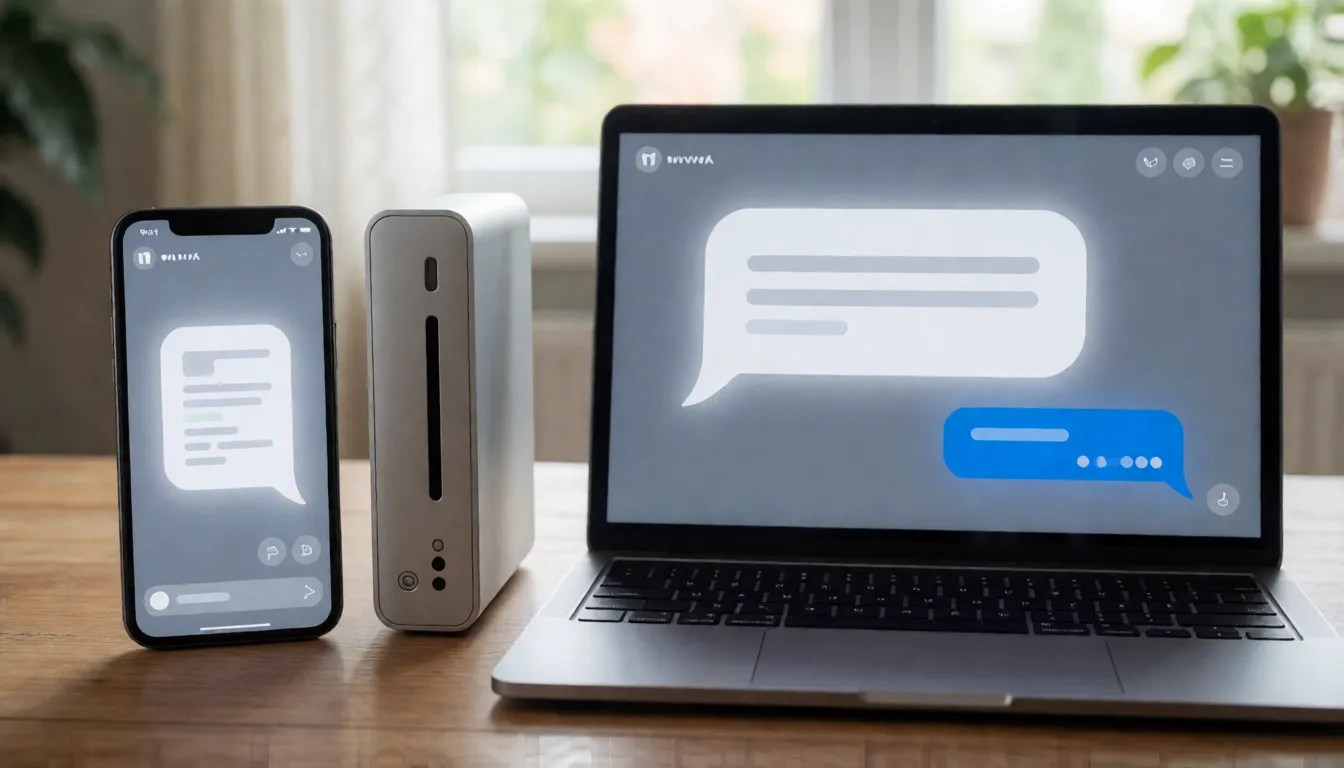
Most small AI models answer fast and then stop thinking. NVIDIA Nemotron Labs Dory1.0 does something different: before it replies, it can run its core “brain” again and again, like a writer who reads a draft and polishes it one more time. You choose how many passes it takes. One pass is quick and chatty, two is the sweet spot, and four squeezes out the best answers for tricky code or long reports. The whole model weighs about as much as a feature film, so it fits on a laptop, a Mac or even a phone.
- 4B looped model
- 256K context
- Open weights

Uncensored Alternative AI Chat Generator
Want long, unfiltered roleplay and adult stories without setting up a local model? Open the uncensored chat and start in seconds.
Open uncensored chat →A 4B model that rereads its own thoughts
NVIDIA released the model on October 16, 2026 as part of its experimental Nemotron Labs line. It has just 4 billion parameters and reads and writes text only, yet it can keep up to 256K tokens in view, which is roughly a full novel or a mid-size code project in a single chat. The trick is a shared block of 20 layers in the middle of the network that gets reused on every loop, so extra thinking costs time instead of extra file size. NVIDIA says it was built for general reasoning in a small package, it understands English officially, and it learned from 43 programming languages. Weights are open on Hugging Face in several sizes, from full precision down to a compact 3.67 GB file.
One dial, four speeds: picking 1, 2 or 4 loops
Think of the loop setting as a gearbox. Every extra loop makes the answer a little smarter and a little slower, and the file on your disk never changes. NVIDIA recommends two loops as the default, and its own test table shows why: the jump from one to two loops is large, while going from two to four adds a smaller final polish.
In practice, people use one loop for brainstorming, titles and casual chat, where speed matters more than depth. Two loops are the everyday setting for writing, summaries and roleplay. Four loops are worth the wait for bug fixing, multi-step agent jobs and careful reading of very long documents. Science-quiz style questions stop improving after two loops, so there is no need to max out the dial for trivia.
| NVIDIA test | 1 loop | 2 loops | 4 loops |
|---|---|---|---|
| SWE-bench Verified (fixing real code issues) | 50.3 | 59.5 | 61.8 |
| IFBench (following instructions) | 74.29 | 77.94 | 79 |
| AA-LCR (long-document reasoning) | 63 | 71 | 73 |
| GDPval-AA Elo (useful work tasks) | 815 | 946 | 967 |
Scores are reported by NVIDIA on the model card, not by an independent lab.
Why a tiny thinking model is a big deal
Small models usually mean small brains. This one flips the trade: you get a compact download that can still plan, follow detailed instructions and use tools. That opens up a few real benefits for ordinary users, not only engineers.
- Private by default: run it on your own machine and your notes, drafts and chats never leave the device.
- Works offline: write on a plane, in a cabin or anywhere the Wi-Fi is bad.
- Huge memory for its size: paste a whole manuscript, meeting transcript or contract pack and ask questions across all of it.
- Sticks to the brief: strong instruction-following means fewer rewrites when you ask for a set format, tone or word count.
- Speed when you want it: drop to one loop for quick back-and-forth, raise it when the task gets hard.
Real scenarios: from code helper to short-drama writer
Because it combines long memory with step-by-step reasoning, the model fits jobs that used to need a much bigger assistant. These are the scenarios early users talk about most:
- Coding sidekick: read a repo summary, point to the files that need changes and draft a patch. Coding is where NVIDIA reports its biggest gains.
- Long-document helper: turn a 100-page report or hours of meeting notes into decisions, open questions and action items.
- Novel and series planning: keep a full outline, character bible and earlier chapters in context while drafting the next scene.
- Short-drama and video scripts: outline vertical episodes, write hooks and cliffhangers, then generate shot-by-shot prompts for an image or video model.
- Tool-using assistant: check data through tools, then draft a reply, handy for support desks and personal automations.
- Adult fiction and roleplay: long, consistent character voices for fictional adults, where the long context keeps the story from drifting.

Prompt templates that make the loops pay off
Clear roles and a fixed output shape get the most out of extra thinking. Replace the parts in brackets and match the loop count to the job. NVIDIA suggests temperature 1.0 and top_p 0.95 as a starting point.
- Code fix (4 loops): You are a senior engineer. Read the repo summary below, list the 3 files to change, then output a unified diff. Think step by step. [summary]
- Long document (2 loops): Summarize the following document into key decisions, open questions and action items with owners. Quote page numbers. [document]
- Short drama (2 loops): Outline a 10-episode vertical short drama about [premise]. For each episode give a 3-second hook, a cliffhanger and 3 shot prompts for a video model.
- Roleplay (2 loops, fictional adults only): You are [character, adult, fictional]. Stay in character, describe scenes vividly and never break the fourth wall.
- Tool call (2 loops): Use the tools to check the account balance, then draft a reply. Return JSON {action, args}.
- Brainstorm (1 loop): Give me 15 punchy titles for [topic], each under 8 words, in three different moods.
How Dory 4B stacks up against Qwen3.5 and Gemma 4
On NVIDIA's comparison table, NVIDIA Nemotron Labs Dory1.0 is strongest at doing things: following instructions, finishing work tasks and coding. It is weaker at pure trivia, which makes sense for a 4B model with less room to memorize facts. The practical takeaway: pair it with web search or your own documents and let it do the reasoning.
| NVIDIA test | Dory 4B (4 loops) | Qwen3.5-4B |
|---|---|---|
| IFBench (instructions) | 79 | 53.83 |
| GDPval-AA Elo (work tasks) | 967 | 424 |
| GPQA (science knowledge) | 72 | 77.71 |
| AA-Omniscience (facts) | about 10 | about 15 |
NVIDIA's table also lists Qwen3.5-9B and Gemma 4 26B A4B; Dory competes with them on agent and instruction tasks while trailing on knowledge questions. All numbers are vendor-reported.
Running it on a phone, Mac or single GPU
The official GGUF file at Q5_K_M is about 3.67 GB, small enough for most modern laptops. The community has already made Mac versions for MLX in 4-, 6- and 8-bit, CoreML builds and a LiteRT build for phones. NVIDIA itself tested on its data-center and DGX Spark hardware, so phone and Mac support comes from the community.
- Ollama and llama.cpp: the model card shows the hf.co/nvidia/NVIDIA-Nemotron-Labs-Dory1.0-4B-GGUF:Q5_K_M tag, but llama.cpp support for this new design is still in a pull request, so older builds may not load it.
- vLLM: support is under review in a pull request; transformers works directly today.
- Thinking mode is on by default in vLLM; in llama.cpp switch it on with --reasoning on.
- On NVIDIA's newest GPUs the NVFP4 build runs about 2.2 to 2.4 times faster, according to NVIDIA's DGX Spark figures.
Abliterated and heretic Dory builds
The official NVIDIA Nemotron Labs Dory1.0 release is safety-tuned, and its model card asks users not to bypass the guardrails. Because the weights are open, community members have already posted modified versions on Hugging Face, such as an abliterated NVFP4 build (with MLX variants) and a heretic GGUF with a few thousand downloads. They are not reviewed by NVIDIA and their behaviour has not been verified here, so read each model card before you download.
- Search Hugging Face for “Dory1.0 abliterated” or “heretic GGUF” and check download counts and card notes.
- Keep roleplay and adult fiction to fictional characters aged 18+, never real people.
- If you would rather not set anything up, an online uncensored chat gives a similar unfiltered experience in the browser.
Using it for spicy stories and videos on Spicy AI
NVIDIA Nemotron Labs Dory1.0 suits a simple creative loop: use a fast, light pass to brainstorm premises and character names, then a deeper pass to check plot logic and write a shot list. Feed those shot prompts into the image editor or image-to-video tool to turn the script into visuals, for example a flirty poolside scene or a moody hotel-bar encounter between two adults. For unfiltered roleplay and adult storylines without installing anything, the uncensored chat is the quickest place to start.
Draft adult roleplay, story scripts and video prompts in an unfiltered chat.
Open uncensored chat →Self-hosting Dory 4B vs chatting online on Spicy AI
| Local deployment (official weights) | Spicy AI online | |
|---|---|---|
| Content filters | Safety-tuned official model | No content filters |
| Open weights | Yes | Not needed — runs in the browser |
| Model | Official weights (BF16, MXFP8, NVFP4 or GGUF) | Similar uncensored chat model, hosted online |
| Price to start | Free download, your own device | Free tier available |
FAQ
What is NVIDIA Nemotron Labs Dory1.0?
It is a 4B open-weight text model released by NVIDIA on October 16, 2026. It reuses a shared block of layers in loops, lets you choose 1 to 4 loops at run time, and reads up to 256K tokens.
How many loops should I use?
NVIDIA recommends 2 as the default. One loop is fastest; four loops scored highest on coding and agent tasks in NVIDIA's tests, such as 61.8 on SWE-bench Verified.
Can it run on a phone or a Mac?
The official Q5_K_M GGUF is about 3.67 GB, and the community offers MLX, CoreML and LiteRT conversions. NVIDIA's own testing used its data-center GPUs and DGX Spark, so other devices rely on community builds.
Does it work with Ollama?
The model card shows an Ollama and llama.cpp command, but llama.cpp support is still in a pull request. You need a build that includes support for this architecture; older versions may fail to load it.
Is there an uncensored Dory model?
Not from NVIDIA. Community abliterated and heretic versions exist on Hugging Face; they are unofficial and their quality is unverified.
Does it understand Chinese or other languages?
NVIDIA only lists English as supported. Other languages may partly work, but quality has not been confirmed.